
From AI Adoption to AI Governance: Building Trust in the Age of Artificial Intelligence
Cuseum · July 15, 2026
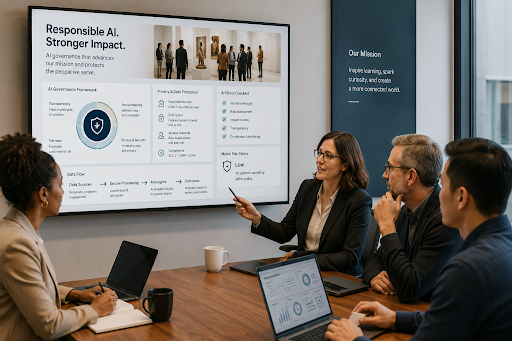
Artificial intelligence is rapidly transforming the nonprofit sector. Organizations are using AI to streamline administrative tasks, personalize donor and member engagement, improve fundraising efforts, and uncover insights that were once difficult to access.
For many nonprofits, the conversation has shifted from "Should we use AI?" to "How can we use AI effectively?"
But another question is becoming just as important:
How can we use AI responsibly?
As adoption accelerates, nonprofits need to think beyond implementation and begin building the policies, oversight, and accountability that ensure AI supports their mission while maintaining public trust.
AI Adoption Is Only the Beginning
Over the past few years, AI has become more accessible than ever. Tools that once required specialized expertise are now helping organizations write content, automate workflows, analyze data, and improve supporter engagement.
These capabilities offer tremendous opportunities. Teams can spend less time on repetitive administrative work and more time focused on building relationships with donors, members, volunteers, and communities. As AI becomes more integrated into everyday operations, it's also reshaping membership and loyalty in the age of AI.
However, introducing AI into daily operations also introduces new responsibilities.
How is AI being used? What information is it processing? Who reviews AI-generated recommendations? And how do organizations ensure technology complements human judgment instead of replacing it?
These are no longer just technical questions. They are governance questions.
Why AI Governance Matters
Trust is one of a nonprofit's most valuable assets.
Supporters expect organizations to act responsibly, protect sensitive information, and make decisions that reflect their values. As AI becomes more involved in communications, fundraising, and operational decision-making, maintaining that trust becomes even more important.
Without clear oversight, AI systems can unintentionally introduce bias, rely on inaccurate information, or create privacy concerns. Even when AI improves efficiency, organizations remain responsible for the decisions made with its assistance.
That's why governance matters.
AI is not just a technology issue. It is a governance issue. Organizations that already prioritize strong data strategies have a much stronger foundation for implementing AI responsibly.
Establishing clear policies helps organizations adopt new technologies confidently while ensuring they remain accountable to their mission and the communities they serve.
Building an Ethical AI Framework
Responsible AI starts with a clear set of guiding principles.
Every organization will approach governance differently, but several best practices apply across the nonprofit sector:
- Be transparent. Clearly communicate when and how AI is being used.
- Keep humans involved. AI should support decision-making, not replace human oversight.
- Protect data. Safeguard donor, member, and organizational information through strong privacy and security practices.
- Monitor for bias. Regularly evaluate AI-generated outputs to ensure they are accurate, fair, and inclusive.
- Stay mission-focused. Adopt AI because it advances your mission, not simply because the technology exists.
Organizations don't have to build these principles from scratch. Frameworks such as UNESCO's Recommendation on the Ethics of Artificial Intelligence provide practical guidance for using AI in ways that promote transparency, accountability, and fairness.
Governance Starts with Leadership
AI governance isn't solely the responsibility of IT teams.
Executive leadership and boards play a critical role in establishing expectations, approving policies, and ensuring AI initiatives align with organizational values. Organizations looking to strengthen board oversight should also consider the recommendations in Why Every Nonprofit Board Needs AI Expertise.
That may include creating internal guidelines for AI use, investing in staff education, reviewing new AI tools before adoption, and regularly evaluating how technology is affecting operations and stakeholder relationships.
As AI continues to evolve, governance should become an ongoing conversation rather than a one-time initiative.
Organizations that invest in AI literacy today will be better prepared to adapt tomorrow.
Governance Is the Path Forward
Artificial intelligence will continue to reshape how nonprofits operate, engage supporters, and deliver on their missions. The organizations that succeed won't necessarily be those using the most AI. They'll be the ones using it thoughtfully.
Responsible AI isn't about slowing innovation. It's about ensuring innovation reflects the values that define the nonprofit sector.
Strong governance also enables organizations to confidently embrace new technologies that improve visitor and member engagement, including Digital Membership Card Software for Museums.
By establishing strong governance, nonprofits can embrace new technologies with confidence, protect the trust they've earned, and ensure AI becomes a force for greater impact, not greater risk.
Learn how Cuseum helps museums, nonprofits, and cultural organizations adopt technology responsibly and engage supporters at scale. Request a demo to see it in action.