
Digital Memberships for Parks, Zoos & Gardens: Strengthening Retention, Conservation Funding & Visitor Engagement
GuestUser · April 9, 2026

Parks, botanical gardens, and zoos operate at the intersection of education, public engagement, and conservation responsibility. In an era of increasing ecological urgency and rising operational costs, these institutions are seeking sustainable models that reinforce their mission while strengthening financial resilience.
Digital membership programs continue to evolve in order to be the most effective and strategic tool to support this balance.
Digital membership for gardens, parks and zoos work as a structural shift in how these institutions cultivate long-term relationships with visitors and supporters, and constitute a way for the institution to continue its mission and enhance its communication when the visitor experience leaves the premises.
Attendance, Conservation & Institutional Sustainability
Research consistently demonstrates the direct relationship between visitor attendance and conservation investment.
A large-scale global study analyzing data from over 450 zoos found that institutional attendance strongly predicts contributions to in situ conservation projects (Mooney et al., 2020). Institutions with higher attendance were more likely to support conservation initiatives in natural habitats.
As a Study Published in Nature Communication concluded:
“Zoos with high attendance contribute to more in situ conservation projects.”
Globally, zoos and aquariums attract over 700 million visitors annually and collectively invest hundreds of millions of dollars in wildlife conservation. Crucially, much of this funding is generated through visitor-based revenue streams, including admissions and membership programs.
This reinforces an important institutional insight: strengthening membership retention is not merely a development strategy. It directly supports conservation capacity.
Digital membership programs for zoos and museums therefore become part of a broader conservation infrastructure.
From Transaction to Relationship: The Cultural Dimension of Membership
Recent research on conservation culture within zoological institutions highlights another dimension of this discussion. A 2025 study examining conservation culture across AZA-accredited zoos and aquariums found that staff engagement, institutional alignment, and clear mission integration significantly influence conservation outcomes.
The study emphasizes that conservation must be embedded into institutional identity and daily operations, not treated as a peripheral function.
Digital membership supports this integration in three key ways:
It creates continuous mission visibility.
It reinforces member identity as conservation supporters.
It strengthens institutional connection beyond a single visit.
Unlike physical cards, digital membership credentials exist within members’ daily digital environments, including mobile wallets and online portals. This persistent presence reinforces belonging and encourages renewal.
Digital Membership as a Retention Strategy
Retention is foundational to conservation impact. If attendance supports conservation funding, then sustained attendance and renewal amplify that impact.
Digital membership programs improve retention through:
Immediate delivery of credentials
Reduced friction during renewals
Clear visibility of membership status and benefits
Timely renewal reminders
Simplified access to reciprocal or tiered benefits
When members can access and manage their membership digitally, institutions reduce administrative barriers that often lead to lapses.
Moreover, digital membership systems provide accurate status visibility. Members can see their expiration dates, benefits, and renewal options in real time, increasing transparency and reducing confusion.
In institutions where thousands of members support annual conservation efforts, even modest improvements in renewal rates can translate into significant financial impact.

Supporting Institutional Efficiency & Sustainability
Beyond retention, digital membership programs align with the sustainability goals that many gardens and zoos publicly champion.
The AZA framework requires accredited institutions to incorporate green practices and sustainability into operations. Digital membership contributes to this by:
Reducing plastic card production
Eliminating mailing waste
Decreasing printing and fulfillment costs
Supporting paperless operations
While conservation culture research shows that staff often desire stronger green practices within their institutions (Kubarek et al., 2025), digital membership offers a practical operational step toward that goal.
In this way, digital membership programs serve both environmental and financial sustainability.
Strengthening the Member-Conservation Connection
Attendance drives conservation funding. Institutional culture shapes conservation engagement. Digital membership reinforces both.
By delivering membership credentials digitally, institutions create ongoing touchpoints that can:
Highlight conservation initiatives
Reinforce species protection efforts
Communicate updates on field projects
Showcase measurable impact
For zoos in particular, where flagship species often drive visitor interest and fundraising efforts, digital membership becomes a bridge between public experience and long-term conservation support.
The research also underscores that while large mammals may drive attendance, alternative collection strategies can be equally effective when managed thoughtfully. This suggests that institutions must remain adaptable in how they balance visitor preferences with conservation priorities.
Digital membership supports this adaptability by ensuring revenue continuity even as institutional strategies evolve.
Cultural Institutions in a Digital Era
Visitor expectations increasingly include mobile convenience, fast access, and up to date digital-first interactions.
Applying digital membership in museums and gardens helps institutions:
Modernize member experience
Reduce operational friction
Improve long-term engagement
Support educational programming through stable funding
Strengthen data accuracy for membership management
Importantly, digital memberships support human engagement by removing administrative barriers so that staff can focus on mission-driven work.
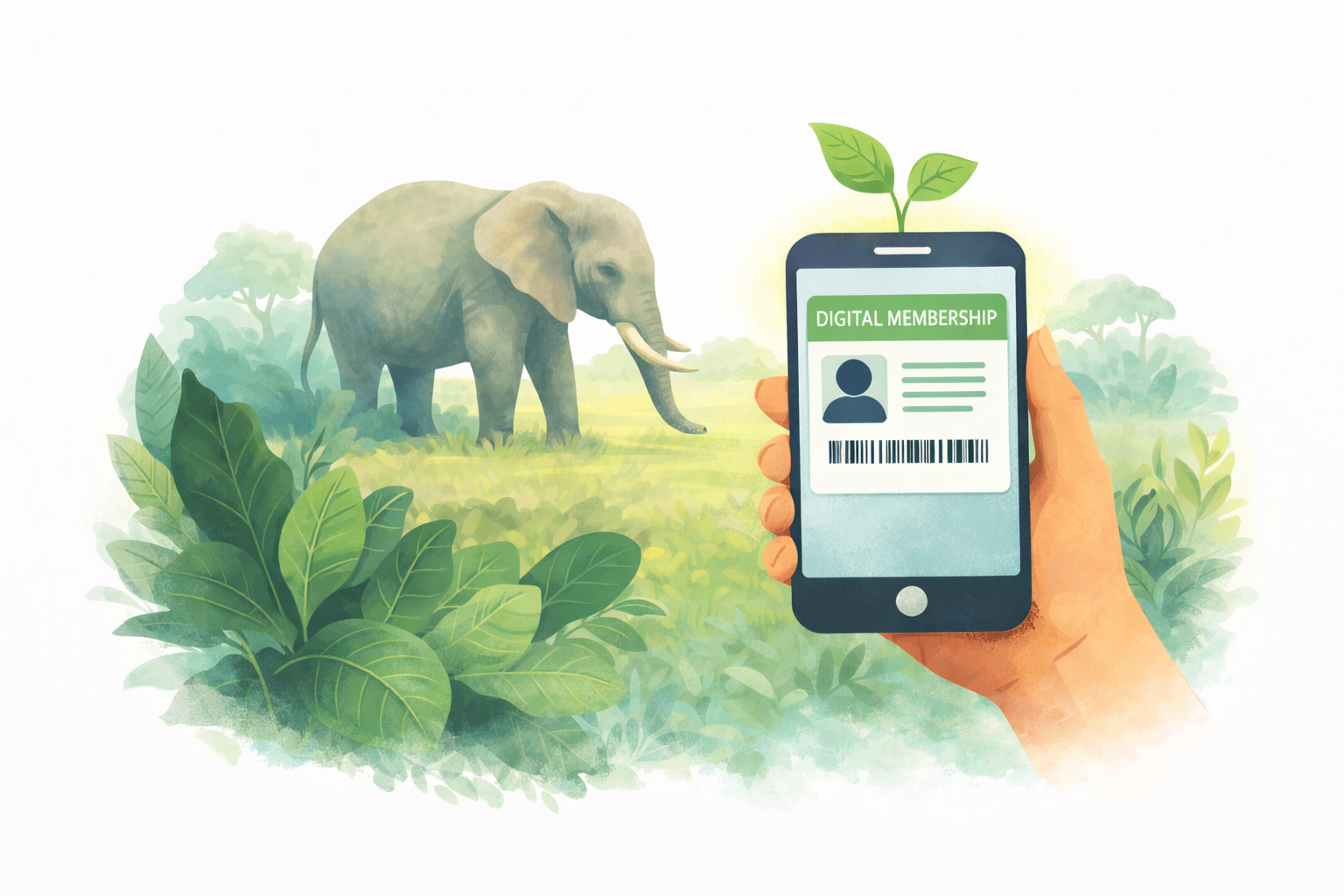
A Strategic Shift, Not Just a Format Change
Digital membership programs for museums, gardens, and zoos represent more than replacing plastic cards with mobile credentials.
They:
Stabilize revenue streams
Improve membership retention
Align operations with sustainability goals
Reinforce conservation identity
Strengthen long-term institutional resilience
As research continues to show, conservation outcomes are closely linked to attendance, engagement, and institutional culture. By applying digital membership strategically, cultural institutions position themselves to sustain both their mission and their impact.
In a landscape where conservation demands urgency and operational efficiency demands innovation, digital membership offers a solution that supports both.
By delivering credentials directly to members’ smartphones, enabling automated renewal reminders, and maintaining year-round visibility of membership benefits, institutions can increase retention while reducing administrative workload.
At the same time, stronger membership engagement supports the broader mission of cultural and conservation organizations by stabilizing the funding that makes education, research, and species protection possible.
If your institution is exploring ways to modernize membership programs and improve long-term engagement for conservation projects:
👉 Schedule a demo with Cuseum to see how digital membership credentials, mobile wallet integration, and automated lifecycle campaigns can support retention, revenue stability, and mission-driven impact.