
How the Jewish Museum Vienna Leveraged Digital to Take a Special Exhibition Beyond Its Walls
Cuseum · November 3, 2026
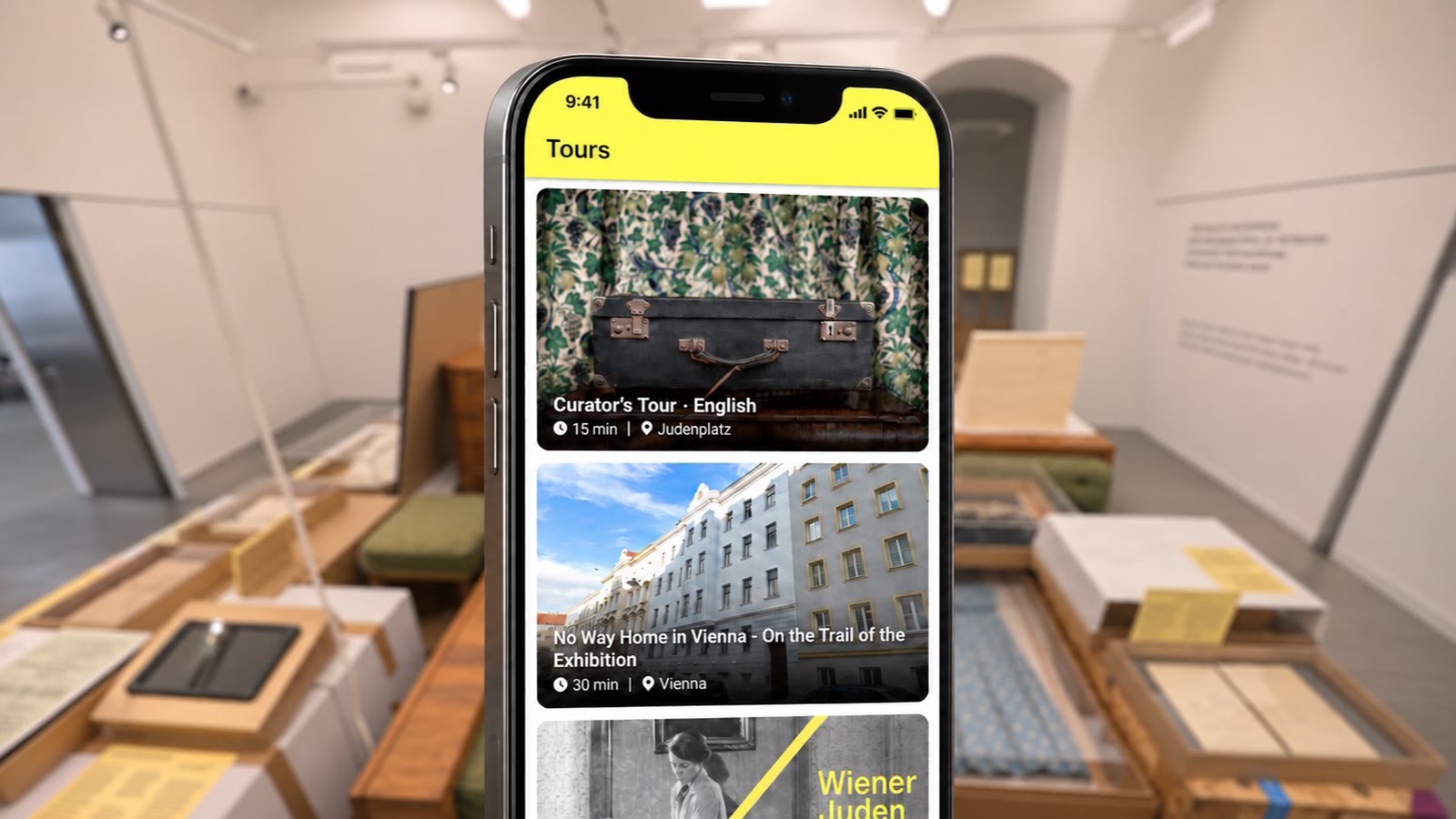
Over the past decade, we’ve watched institutions use our platform in ways we never could have predicted, and every so often a project stops us in our tracks. A recent exhibition at the Jewish Museum Vienna was one of them. Its subject, the Viennese Jews driven into exile, is vast: tens of thousands of lives scattered across continents, each with its own letters, photographs, and documents. A gallery can only hold so many cases, and a book behind glass can never be opened, so how do you bring as much of this history to light as possible? What caught our attention was how the museum didn’t let those limits decide which stories got told, and instead used the digital space to carry the exhibition far beyond its walls.
What the museum brought to life for “Heimatlos. Wiener Juden im Exil (No Way Home: Viennese Jews in Exile)” goes further than a typical digital companion. Visitors can page through the fragile pages of a book that sits under glass in the gallery, follow individual families across a map of the cities and countries where they resettled, and explore stories the exhibition had no room to include, whether they’re in Vienna or on the other side of the world. Powered by Cuseum, it turns a finite exhibition into one that keeps growing.
Start With a Story Larger Than the Gallery
The museum's exhibition text sets out the history: "After the 'Anschluss' on March 12, 1938, Vienna became a model city for the systematic disenfranchisement and expulsion of Jews. In a short time, the third-largest Jewish community in Europe was decimated through emigration, deportation, and murder." Those who escaped were scattered across the world, and "the vast majority never returned from exile."
Director Barbara Staudinger frames the exhibition around one question: "What does it mean to no longer have a homeland?" Curator Caitlin Gura approaches it through small objects and the people behind them. "I want to bring the individual back into the spotlight," she said when the exhibition was presented to the press, as reported by the Austria Press Agency (APA; both quotes translated from German). Many of the objects come from the museum's own holdings, and many were provided by descendants of the families.
With limited exhibition space and countless stories to tell, the museum reaches past this obstacle in two ways: a companion book from Czernin Verlag that covers further objects, and the Cuseum app, which holds an introduction and exile stories tied to places in Vienna and beyond.
Open the Journal That Has to Stay Closed
Some objects can only be shown in part. A fragile, irreplaceable book displayed in a case cannot be opened, and no visitor can turn its pages. In the app, every page of the family journal has been digitized, so visitors can browse it page by page, in the gallery or from home. The original stays protected, and the whole object becomes available to anyone who opens the app. For museums with diaries, albums or letters in their collections, it is one of the most direct ways to show what a case cannot.
Map Where the Families Were Scattered
A single room cannot show distance or give us an instant sense of geographic space. The museum's exhibition text lists where Vienna's Jews were scattered: to European countries, North and South America, Africa, the Middle East, Asia and Australia. In the app, a world map, which the museum calls its “Growing World Map,” pins the exhibition's stories to places where families found refuge.
A second map works at street level. The app's map of Vienna “pins” the stories to addresses across the city, among them the site of the Palais Rothschild, the building the Nazis used for the Central Office for Jewish Emigration. A 30-minute tour, No Way Home in Vienna: On the Trail of the Exhibition, takes the exhibition out of Judenplatz and into the city where its stories began.
Invite the Families to Add Their Stories
The exhibition draws on the families whose history it tells. Ahead of the opening, the museum issued a call for digital participation. Descendants could send a photo of one object that captures their family's exile story, with a few details about it, what it says about that story and what its inclusion means to them, in up to 1,000 characters (about 180 words). The Leo Baeck Institute in New York shared the call with its followers in March. Those contributions sit in the app beside the curated tours, each told in the family's own words.
Open the Exhibition to People Far From Vienna
Access is the other half of the story. The museum offers the app in a variety of forms to ensure it is accessible to all: via browser and Google Play, so a descendant who lives far from Vienna can read the exhibition's stories, perhaps including their own family's, without traveling.
Inside the building, visitors can choose a 15-minute curator's tour in English or in German, or a 60-minute German tour of the exhibition. The same app can serve the visitor at Judenplatz and a reader on another continent.
Design the App as Part of the Exhibition
The Jewish Museum Vienna used its app to hold what the gallery could not and to add an additional layer of narration and context. That approach fits any museum whose subject is larger than its galleries, rooms, and corridors.
Decide what the walls cannot hold. Digitize what the case keeps closed. Map what one room cannot show. Ask the people whose story it is to help tell it. For the Jewish Museum Vienna, that meant a digitized family journal visitors can page through, a world map of where families found refuge, a map of the Vienna addresses where their stories began, objects and stories shared by descendants, and an exhibition that people far from Vienna can explore from home.
Ready to Take Your Exhibition Beyond Its Walls?
Cuseum's mobile engagement platform helps museums deliver mobile content, audio guides, digital tours and interactive experiences that extend beyond physical spaces, on visitors' own phones. Request a demo to see how it works.
Heimatlos. Wiener Juden im Exil is on view at Museum Judenplatz, Judenplatz 8, 1010 Vienna, through April 2027. More on the Jewish Museum Vienna's exhibition page.