
Designing Museum Ticketing Software with Mobile Wallet & QR Code Integration
GuestUser · May 9, 2026
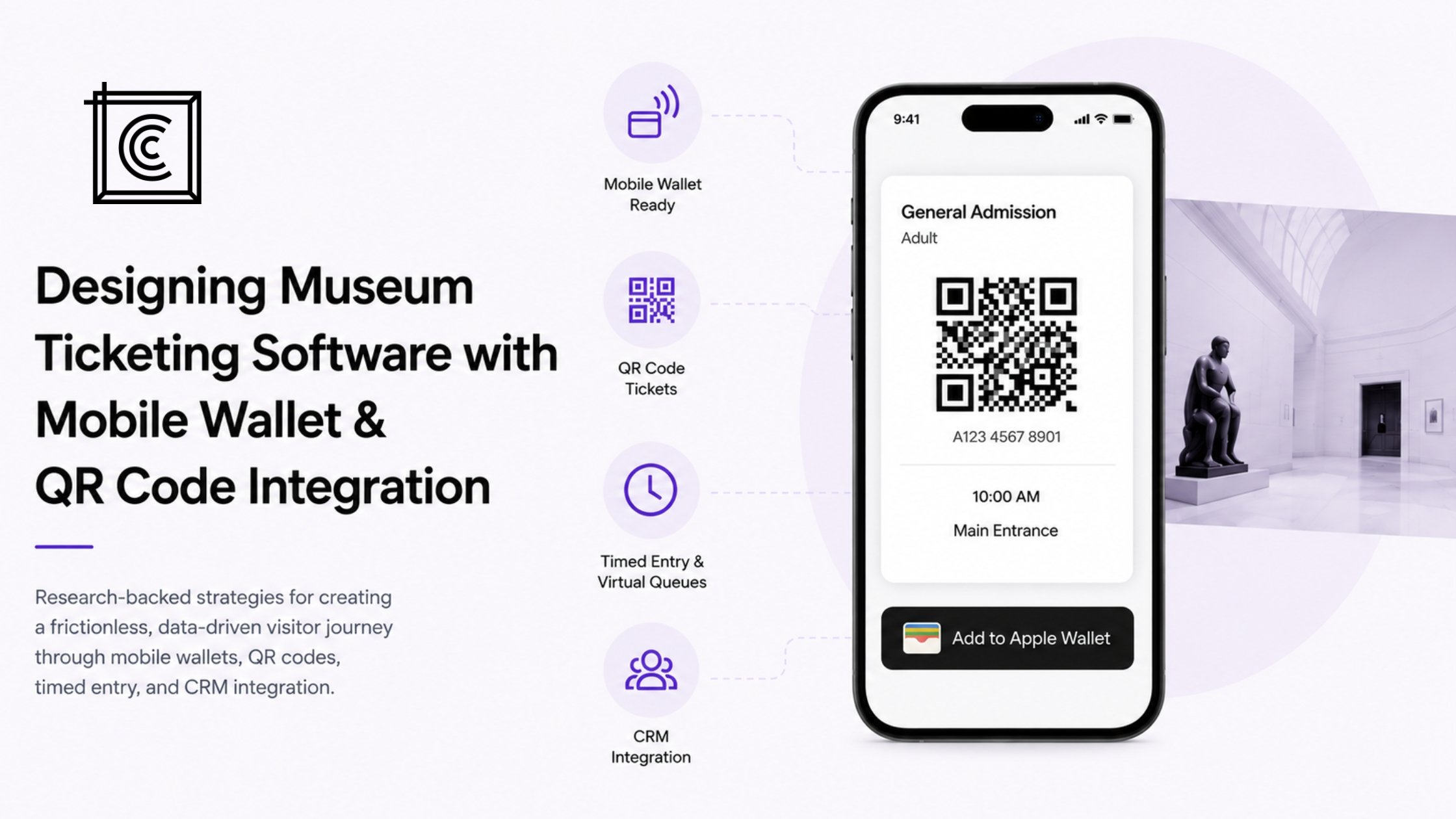
The "museum experience" no longer begins at the gallery entrance; it begins on a smartphone screen. As institutions transition from legacy systems to agile, digital-first solutions, the design of museum ticketing software is a critical factor in institutional success.
To remain relevant, museums have the incredible opportunity, or necessity, to bridge the gap between their historical collections and the high-tech expectations of their visitors. This article explores the research-backed strategies for designing ticketing software that utilizes mobile wallets, QR code tickets, and CRM integrations to create a frictionless, data-driven visitor journey that delights every guest.
1. The Rise of the "Contactless" Expectation
The primary driver behind the shift to mobile-integrated ticketing is a fundamental change in consumer behavior toward ease and efficiency. Physical wallets are being replaced by digital ones at a record pace, offering a more streamlined way to move through the world. According to the Reserve Bank of Australia’s 2023 Consumer Payments Survey, contactless card and mobile device payments reached approximately 77% of all in-person transactions by 2022.
For museum designers, this shift is a brilliant opportunity to make "mobile-native" experiences the standard. By integrating with Apple Wallet and Google Pay, ticketing platforms eliminate the "email scramble"—the friction-filled moment when a visitor stands at the gate. Instead, the process becomes a seamless "tap-and-go" interaction.
Arcese et al. (2014) in their research on Near Field Communication (NFC) Trends note that these technologies are essential for "improving the tourism value chain." When a ticket is stored in a mobile wallet, it can trigger geo-fenced notifications, warmly welcoming the visitor as they approach the building and ensuring they have their entry pass ready in a single swipe.
2. QR Codes: The "Smart Interface" of Modern Entry
While NFC handles the "tap-and-go" experience, the QR code remains a highly reliable workhorse of museum operations. However, modern design has elevated the QR code from a static link to a "context-aware" smart urban interface.
Research published in MDPI (2026) regarding Smart Urban Governance highlights that QR-based systems significantly improve service response times. From a design perspective, QR codes offer a level of resilience that ensures a smooth entry for everyone. Under the ISO/IEC 18004 standard, QR codes are designed with sophisticated "Error Correction" capabilities. This means they remain perfectly readable even if up to 30% of the code area is damaged or obscured by a cracked phone screen.
How this enhances the Museum Experience:
Operational Flow: Scanners process QR codes in milliseconds, allowing guests to spend less time in line and more time with the art.
Universal Accessibility: They can be delivered via email, SMS, or mobile wallet, ensuring that every visitor has a reliable digital backup that works every time.
3. Optimizing the Experience: Timed Entry and Virtual Queues
One of the most exciting advancements for world-class institutions is the ability to master crowd management through intelligent design. Designing software with timed entry capabilities is a powerful way to ensure a peaceful, intimate environment for art and history lovers.
A landmark study by Attanasio et al. (2022), published in Information Technology & Tourism, examined the visitor flow at the Uffizi Gallery in Florence. The research demonstrated that a data-driven system could "virtualize" queues. By allowing visitors to book specific time slots via mobile interfaces, the museum successfully:
Created a calm, line-free entrance experience.
Enhanced the beauty of the surrounding "street-scape" by removing congestion.
Increased visitor joy by providing the "certainty of entry" and more time to explore.
Designing software that dynamically adjusts these time slots based on real-time occupancy data is the ultimate tool for museum operational excellence.
4. The Power of CRM Integration: Growing Your Community
Ticketing software is most powerful when it acts as the gateway to a lifelong relationship. To be truly effective, it should be the "front end" of a robust CRM (Customer Relationship Management) system.
Research by Zhao et al. (2024) in Heliyon indicates that museums that integrate their digital sales with CRM platforms see a measurable boost in operational productivity. When a ticket is scanned, the system doesn't just grant access; it recognizes a valued member of your community.
"Integrating ticketing with CRM allows cultural institutions to move beyond siloed data, enabling unified transactions where a single checkout can process tickets, merchandise, and memberships simultaneously." — (Zhao et al., 2024).
For institutions using platforms like Blackbaud Altru, this integration is a game-changer. It allows staff to offer personalized greetings or acknowledge a donor's contribution the moment their QR code is scanned. This "semantic interoperability" is built on the CIDOC-CRM (ISO 21127) model, which ensures that every transaction helps build a clearer picture of who your visitors are and how to better serve them.
5. Empowering Institutions: The Joy of Digital Transformation
The journey toward digital transformation is a wonderful opportunity for institutional growth and empowerment. Rather than seeing a "digital divide," forward-thinking museums view this as an era of digital inclusion and staff enrichment.
A study from the University of Venice (UNITesi, 2021) on Digital Transformation in Museums suggests that when museums embrace "Digital Transformation" (DT), they unlock new ways to engage their communities and empower their staff with modern, easy-to-use tools. By investing in intuitive ticketing software, museums provide their teams with the best possible environment to succeed.
Furthermore, Wicks (2015) notes that reliability is the foundation of a great user experience. This encourages designers to build software that is robust and "always-on." When we prioritize high-performance design, we ensure that:
Resilient Systems: "Offline modes" ensure that even if the internet dips, the QR codes scan perfectly, maintaining a seamless guest experience.
Empowered Staff: Intuitive UIs mean staff spend less time looking at screens and more time engaging with visitors.
Universal Design: Every interface is built for ease of use, ensuring that visitors of all ages and tech backgrounds feel welcomed and confident.
Digital transformation isn't just about the tech—it’s about the people. It’s about creating a "universal welcome" where the technology works so well it becomes invisible, leaving only the magic of the museum behind.
6. Summary: The Key Pillars of Modern Ticketing Design
To summarize the research and data, an optimized museum ticketing solution is built on four positive, growth-oriented pillars:
Mobile-First Delight: Leveraging the 77% contactless payment trend to provide the ease of Apple/Google Wallet passes.
Unshakeable Reliability: Utilizing QR codes with high error correction to guarantee a smooth entrance for every guest, every time.
Stress-Free Throughput: Implementing timed entry to remove physical lines and enhance the beauty of the museum environment, as proven by the Uffizi Gallery.
Community Connection: Using CRM integration to turn every ticket scan into an opportunity for personalized engagement and lasting loyalty.
Investing in the Future of Culture
As Mularsari et al. (2024) noted in their study of the Betawi Museum, technology is a vibrant "attraction" that enhances the prestige of a museum. A seamless, high-tech entry process signals to the visitor that the museum is a forward-thinking, welcoming, and world-class space.
By designing museum ticketing software with Mobile Wallet and QR code integration at its core, cultural institutions can reduce overhead while increasing the happiness of both staff and visitors. This is an investment in the future of the visitor experience.
Ready to modernize your institution’s ticketing experience? Discover how Cuseum helps museums, science centers, gardens, historic sites, and cultural organizations deliver seamless mobile ticketing with Apple Wallet, Google Wallet, QR code access, CRM integrations, timed entry, and visitor engagement tools designed for today’s audiences.